E-CLUB PROGRAM
PRESIDING TODAY IS: Bonnie Branciaroli, Public Image Chair
 Ding! We’re now in session.
Welcome, all – visitors, fellow Rotarians, and guests alike to this E-Club program!
Remember the Four-Way Test!
At the beginning of each meeting, we remind ourselves of The Four-Way Test. Therefore, please remember to ask yourself always . . .
Of the things we think, say, or do:
- Is it the TRUTH?
- Is it FAIR to all concerned?
- Will it build GOODWILL and BETTER FRIENDSHIPS?
- Will it be Beneficial to all concerned?
Reflective Moments
“It is certain, in any case, that ignorance, allied with power, is the most ferocious enemy justice can have.”
– James Baldwin
“Racism is not getting worse, it's getting filmed.”
― Will Smith
“You must give your own story to the world.”
― Carter G. Woodson
Leadership Quotes
“In the Bicentennial year of our Independence, we can review with admiration the impressive contributions of black Americans to our national life and culture.”
– President Gerald Ford, Black History Month 1976
“History shows that it does not matter who is in power or what revolutionary forces take over the government, those who have not learned to do for themselves and have to depend solely on others never obtain any more rights or privileges in the end than they had in the beginning.”
– Carter G.Woodson
March 10 – (Second Tuesday of every month) –
E-Club Coffee Chat: 8:30 am EST
March 28 – RLI, Parts I, II, III – Fairmont, WV. Registration now open at: midatlanticrli.org
April 15, 2026 – RYLA – Registration Deadline, April 15, 2026. Conference: May 8-10, 2026 at Jackson's Mill.
May 29-30 – District 7545 Conference – Camp Dawson, Kingwood, WV. See the
District website for more info.
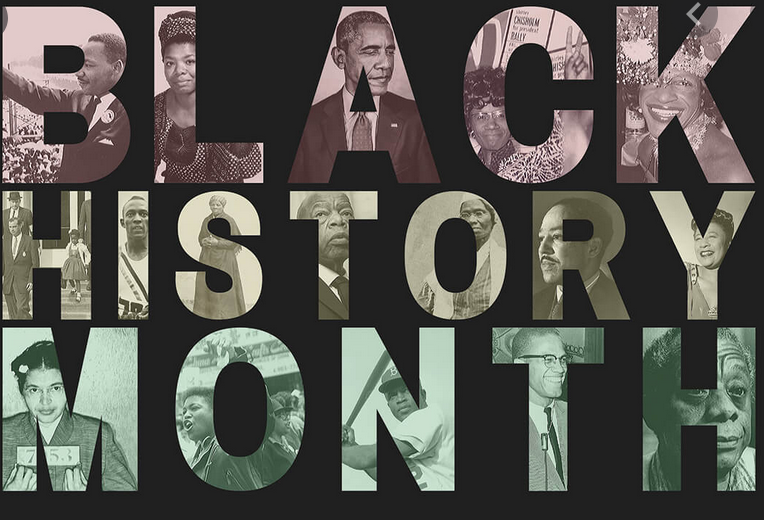
In 2026, Black History Month marks a major milestone: the 100th anniversary of organized efforts to recognize Black history in the United States. Originally established as "Negro History Week" in 1926 by Dr. Carter G. Woodson, known as the "Father of Black History" who emphasized self-definition, the critical importance of education, and the necessity of studying Black history to combat racial inequality. this centennial year of 2026 brings several key changes and updates to the commemoration.
"A Century of Black History Commemorations". This theme focuses on the 100-year legacy of these observances and how they have shaped the teaching of Black history. "Negro History Week eventually became a month-long celebration as a way to promote, research, preserve, interpret, and disseminate information about Black life, history, and culture to the global community.
Why February for Black History Month?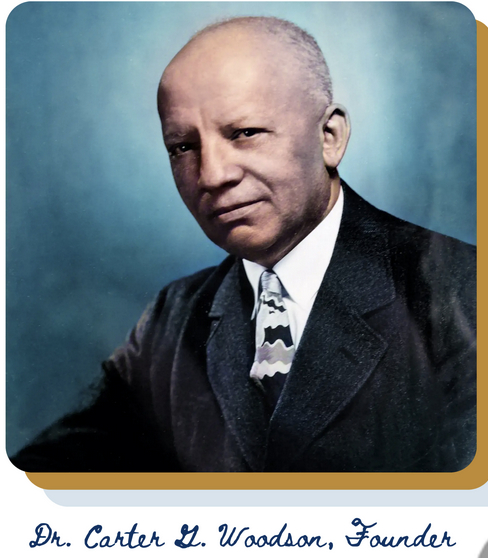
The relevance of February goes back to 1926, when ASALH’s founder, Dr. Carter G. Woodson first established “Negro History Week” during the second week of February. And why that week?
Woodson chose February for reasons of tradition and reform. February encompassed the birthdays of the two great Americans who played a prominent role in shaping black history, Abraham Lincoln and Frederick Douglass, whose birthdays are the 12th and the 14th, respectively. More importantly, he chose them for reasons of tradition.
Since Lincoln’s assassination in 1865, the black community had been celebrating the fallen President’s birthday, and since the late 1890s, black communities across the country had been celebrating Douglass’. Well aware of the preexisting celebrations, Woodson built Negro History Week around traditional days of commemorating the black past. He was asking the public to extend their study of black history.
However, Woodson never confined Negro History to a week. His life’s work and the mission of ASALH (since its founding in 1915) represented a living testimony to the year-round and year-after-year study of African American history.
Black History Month was first instituted as a U.S. federal acknowledgement in 1976 by President Gerald Ford, who recognized it during the nation's Bicentennial. The month-long expansion was formally recognized by Congress with Public Law 99-244 in 1986.
Timing was everything in Ford’s decision to recognize Black History Month in 1976. That year, Americans were looking back at the country’s past 200 years and the Bicentennial commemoration became an opportunity to question the relationship between the past and the present.
Activists and historians started important conversations about not only the legacies of the American Revolution, but which groups were traditionally included or excluded from stories of the nation’s history. These conversations, in turn, informed many Bicentennial efforts.
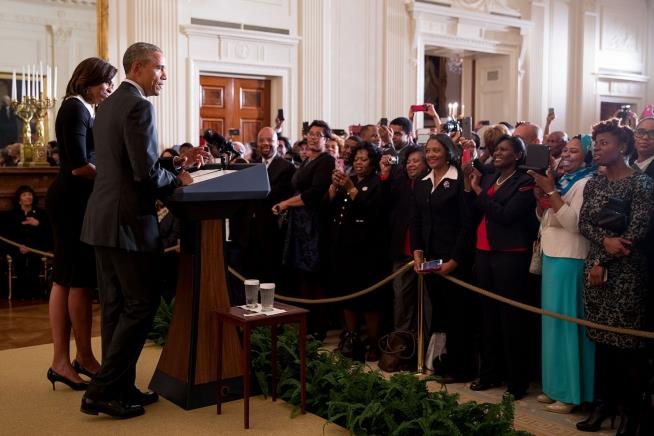
In February 2009, Barack Obama and Michelle Obama hosted their first Black History Month celebration at the White House, marking a historic milestone as the first African American First Family to do so. The event honored African American leaders, artists, educators, and community advocates, and underscored the Obama administration’s commitment to recognizing Black history as a central part of the American story. The celebration featured performances, remarks on the legacy of Black achievement, and reflections on the ongoing struggle for equality and opportunity in the United States.
Hands off Movement
In February 2025, the ASALH organization held its first "Hands Off Our History" rally in conjunction with the many factors that came into play during the institution of the second Trump Administration.
The "Hands Off" mass mobilization movement was a major series of nationwide protests in early 2025. While the largest coordinated day of action occurred on April 5, 2025, there were significant events in February 2025 that laid the groundwork for this movement.
- February 5, 2025 – Treasury Department Rally: Congresswoman Ayanna Pressley and other lawmakers rallied outside the U.S. Treasury Department in Washington, D.C. to protest followed lawmakers being denied entry to the building and targeted Elon Musk's involvement in federal agency oversight.
- February 17, 2025 – "No Kings on Presidents' Day": Organizers from the 50501 movement staged nationwide rallies under the "No Kings" banner. Thousands gathered in Washington, D.C., Boston, New York City, and other cities to protest federal job cuts and executive actions.
The movement expanded significantly throughout the spring of 2025:
- Hands Off Our Schools (April 4, 2025): Students from universities including Howard and Georgetown protested the potential closure of the Department of Education.
- Main "Hands Off!" Nationwide Action (April 5, 2025): An estimated 3 to 5.2 million people participated in over 1,400 locations across all 50 states. Demonstrators voiced opposition to budget cuts, the dismantling of federal agencies, and threats to social programs.
- Hands Off Our History (May 4, 2025): A specific rally with this name was held in Washington, D.C., focused on protecting historical narratives and institutions.
The Federal Budget cuts that followed hollowed out many African-American public museums. In 2025, there was a major temporary shutdown of federally funded Black history institutions. Key closures and disruptions in 2025 included:
Exhibit Rotations: Several exhibits at the NMAAHC and the National Museum of American Historywere reportedly rotated or removed following a March 2025 executive order aimed at removing "divisive, race-centered ideology" from federal properties. - The Trump administration terminated its federal grants in April 2025, citing a misalignment with "agency priorities".
- Smithsonian Curatorial Changes: Beyond physical closures, the NMAAHC faced administrative upheaval amid federal pressure to review exhibits for "ideological content".
••••••••••••••••••••••••••••••••••••••••••••••••••••••••••••••••••••••••••••••••••••••••••••••••••••••••••••••••
Members, please leave a comment, so we know you've visited us!
 Ding! We’re now in session.